Dark Spots vs Melasma: What's the Difference and How Can You Treat Them?
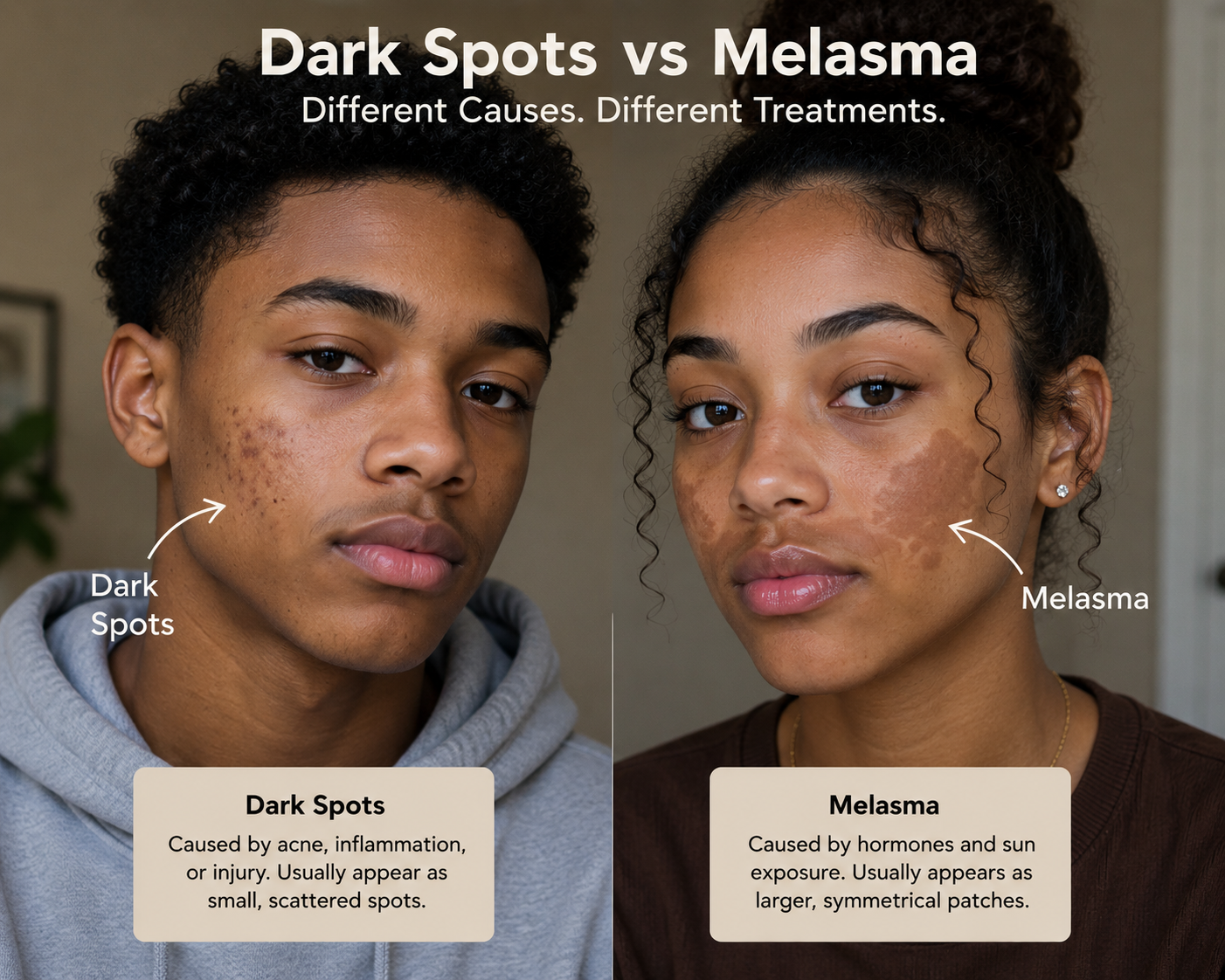
Have you noticed patches of discoloration on your face and wondered whether they're dark spots or melasma?
You're not alone.
Many people use these terms interchangeably, but they're actually different skin concerns with different causes.
Understanding which one you have is important because the most effective treatments can vary significantly.
Let's explore the differences.
🤔 Dark Spots vs Melasma: What's the Difference?
Dark Spots (Post-Inflammatory Hyperpigmentation)
Dark spots are small areas of increased pigment that develop after skin inflammation or injury.
Common causes include:
- Acne breakouts
- Insect bites
- Cuts or scratches
- Burns
- Skin irritation
Dark spots are usually:
- Small and localized
- Brown, black, red, or purple
- Found where inflammation occurred
- Able to fade over time
Think of them as pigment marks left behind after the skin heals.
Melasma
Melasma is a chronic pigmentation condition that causes larger patches of discoloration.
It is often linked to:
- Hormonal changes
- Pregnancy
- Birth control pills
- Sun exposure
- Genetics
Melasma typically appears as:
- Larger patches rather than individual spots
- Symmetrical discoloration
- Brown or gray-brown patches
- Areas on both sides of the face
Think of melasma as a pigment disorder rather than a mark left behind by a single blemish.
🔍 Quick Self-Test
If the discoloration is...
✅ Small spots where pimples once existed
→ It's likely a dark spot.
If the discoloration is...
✅ Large patches appearing on both cheeks, forehead, or upper lip
→ It may be melasma.
If you're unsure
→ Consider consulting a dermatologist for an accurate diagnosis.
📍 Where Does Melasma Usually Appear?
Melasma commonly develops on:
- Cheeks
- Forehead
- Upper lip
- Nose
- Chin
A characteristic sign is that it often appears on both sides of the face in a similar pattern.
Dark spots, by contrast, usually appear wherever previous inflammation occurred.
🌞 Why Sun Exposure Makes Both Worse
One thing dark spots and melasma have in common is their relationship with UV exposure.
Sunlight stimulates pigment-producing cells called melanocytes.
This can:
- Darken existing pigmentation
- Slow healing
- Cause melasma flare-ups
Daily sunscreen is one of the most important steps for managing both conditions.
✨ How to Treat Dark Spots
Dark spots often improve when pigment production is reduced and skin cell turnover is encouraged.
Ingredients That May Help
- Vitamin C
- Niacinamide
- Alpha Arbutin
- Azelaic Acid
- Tranexamic Acid
- Retinoids
Many dark spots begin fading within several weeks to months when treated consistently.
🌸 How to Treat Melasma
Melasma can be more challenging because it often has hormonal triggers.
Treatment may include:
- Strict sun protection
- Prescription creams
- Tranexamic acid
- Hydroquinone (under medical supervision)
- Chemical peels
- Laser treatments
Because melasma can return, long-term maintenance is often necessary.
❌ Common Mistakes That Make Pigmentation Worse
| Mistake | Why It's a Problem |
|---|---|
| Skipping sunscreen | Encourages further pigmentation |
| Picking at acne | Can create new dark spots |
| Using harsh scrubs | Causes irritation and inflammation |
| Expecting quick results | Pigmentation fades slowly |
| Ignoring hormonal factors | May allow melasma to persist |
⏳ How Long Does Improvement Take?
| Condition | Typical Timeline |
|---|---|
| Mild dark spots | 6-12 weeks |
| Moderate dark spots | 3-6 months |
| Melasma improvement | Several months |
| Severe melasma | Ongoing management often needed |
Patience and consistency are essential.
🧴 Ingredients That Can Help Both Conditions
Some skincare ingredients may benefit both dark spots and melasma:
Niacinamide
Helps support an even skin tone.
Vitamin C
Provides antioxidant protection and brightening effects.
Azelaic Acid
Often recommended for pigmentation concerns.
Tranexamic Acid
Increasingly popular for stubborn discoloration.
🧠 Final Thoughts
Dark spots and melasma may appear similar, but they have different underlying causes.
Dark spots usually develop after skin inflammation such as acne and often fade gradually with proper treatment.
Melasma is a more complex pigmentation condition that is frequently influenced by hormones and sun exposure.
Knowing which condition you're dealing with can help you choose more effective treatments and avoid frustration.
💡 Tip: If your pigmentation appears in large, symmetrical patches on both sides of the face, melasma may be more likely than ordinary dark spots.
This article is for educational purposes only and does not replace professional medical advice. Consult a dermatologist for diagnosis and treatment recommendations.
🔗 Other Articles You Might Like
- Acne Scars vs Dark Spots: What's the Difference?
- Why Does My Skin Look Dull?
- How to Repair a Damaged Skin Barrier
- Best Sunscreens for Glowing Skin