Why Are My Dark Spots Not Fading? 10 Reasons They May Be Sticking Around
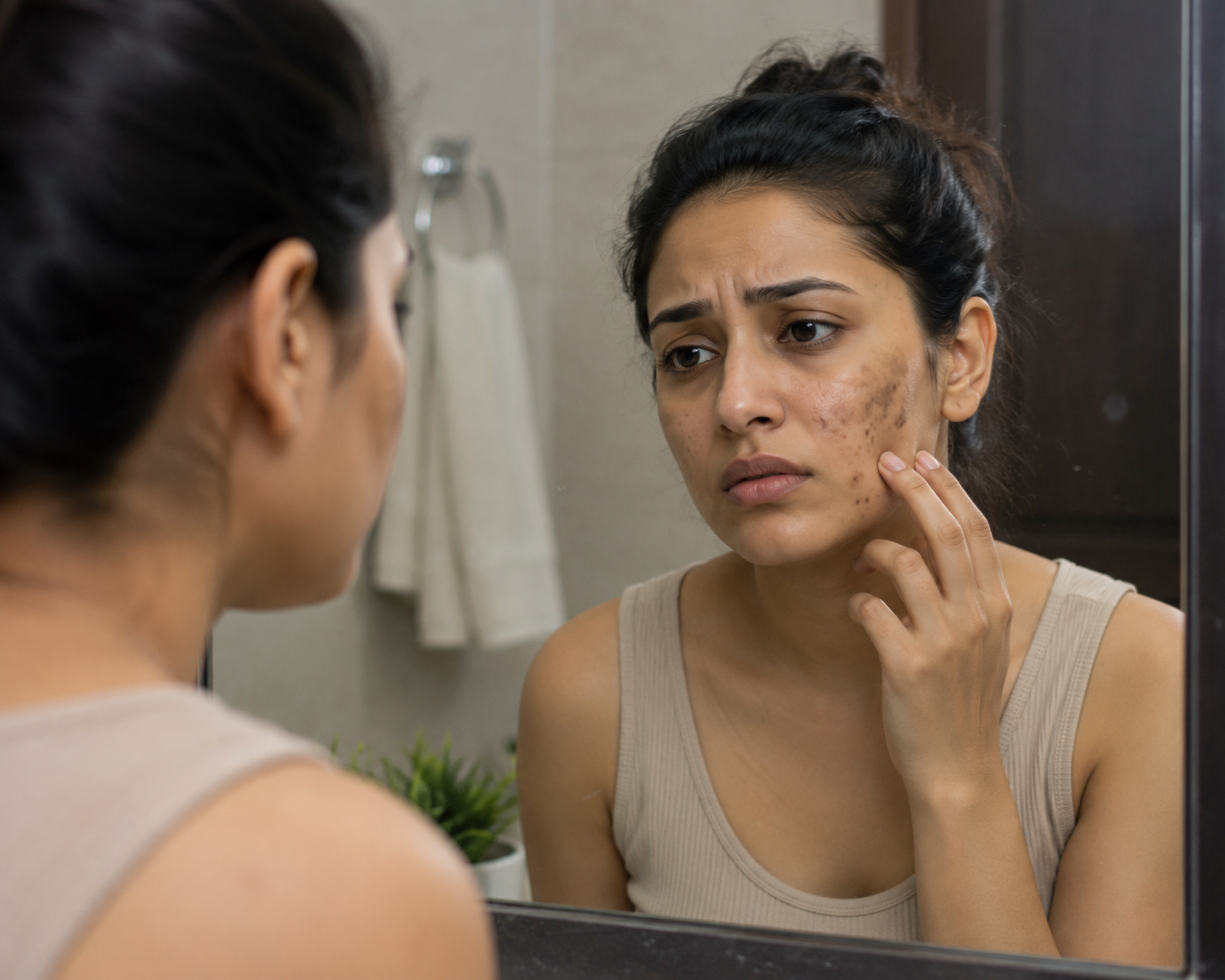
You've been using skincare products.
You've waited weeks.
Maybe even months.
Yet those stubborn dark spots seem exactly the same.
If you're wondering why your dark spots aren't fading, you're not alone.
Many people underestimate how long hyperpigmentation takes to improve and unknowingly make mistakes that slow the process.
Let's explore the most common reasons your dark spots may be sticking around.
🤔 First, What Are Dark Spots?
Dark spots, also known as post-inflammatory hyperpigmentation (PIH), are areas of increased pigment that appear after skin inflammation.
Common causes include:
- Acne
- Cuts and scratches
- Insect bites
- Burns
- Skin irritation
Unlike acne scars, dark spots are flat and affect skin color rather than skin texture.
⏳ Reason #1: You Haven't Given Them Enough Time
One of the biggest misconceptions is expecting dark spots to disappear quickly.
Most dark spots take:
| Severity | Typical Timeline |
|---|---|
| Mild | 6-12 weeks |
| Moderate | 3-6 months |
| Severe | 6-12 months or longer |
The deeper the pigment, the longer the healing process.
Patience is important.
🌞 Reason #2: You're Skipping Sunscreen
This is probably the most common reason dark spots linger.
UV exposure stimulates pigment-producing cells called melanocytes.
As a result:
- Existing spots become darker
- New spots may develop
- Healing slows dramatically
Even expensive treatment products may struggle to work if sunscreen isn't used consistently.
❌ Reason #3: You're Picking at Pimples
Every time you pick at a breakout, you increase inflammation.
More inflammation often means:
- Darker pigmentation
- Larger spots
- Longer healing times
The best treatment is prevention.
🧴 Reason #4: You're Using Products Inconsistently
Many brightening ingredients require weeks or months of consistent use.
Using a product for:
- 3 days
- 1 week
- Occasionally
is usually not enough time to see meaningful results.
Consistency matters more than having a complicated routine.
🔥 Reason #5: Your Skin Is Being Irritated
Harsh products can trigger inflammation and worsen pigmentation.
Common culprits include:
- Over-exfoliation
- Strong scrubs
- Excessive acids
- Frequent product switching
An irritated skin barrier often slows recovery.
🌸 Reason #6: It Might Be Melasma Instead
Sometimes what appears to be dark spots is actually melasma.
Melasma usually appears as:
- Larger patches
- Symmetrical discoloration
- Pigmentation on both cheeks
- Pigmentation on the upper lip or forehead
Melasma often requires a different treatment approach.
⚠️ Reason #7: The Pigment Is Deep in the Skin
Some dark spots affect deeper skin layers.
These spots often:
- Look darker
- Fade more slowly
- Require professional treatment
Deep pigmentation naturally takes longer to improve.
😴 Reason #8: Lifestyle Factors Are Slowing Healing
Your skin's recovery process is influenced by:
- Sleep quality
- Stress levels
- Nutrition
- Hydration
Poor overall health can affect how efficiently skin repairs itself.
🧪 Reason #9: You're Using the Wrong Ingredients
Not all skincare products target pigmentation effectively.
Ingredients with evidence for dark spots include:
Vitamin C
Helps brighten skin and reduce oxidative stress.
Niacinamide
Supports an even skin tone.
Azelaic Acid
Popular for treating hyperpigmentation.
Alpha Arbutin
Helps regulate pigment production.
Tranexamic Acid
Often recommended for stubborn discoloration.
Retinoids
Encourage healthy skin cell turnover.
🏥 Reason #10: Professional Treatment May Be Needed
Some dark spots are particularly resistant.
Professional options may include:
- Chemical peels
- Microneedling
- Laser treatments
- Prescription creams
A dermatologist can recommend the best approach for your skin type and pigmentation depth.
✨ A Simple Routine for Dark Spots
Morning
- Gentle cleanser
- Vitamin C or niacinamide serum
- Moisturizer
- SPF 30+ sunscreen
Night
- Gentle cleanser
- Pigmentation treatment serum
- Moisturizer
Simple routines are often easier to follow consistently.
❌ Common Mistakes That Slow Progress
| Mistake | Why It Hurts Progress |
|---|---|
| Skipping sunscreen | Darkens pigmentation |
| Picking pimples | Creates new spots |
| Over-exfoliating | Increases irritation |
| Expecting overnight results | Leads to frustration |
| Constantly changing products | Makes results harder to track |
🧠 Final Thoughts
Dark spots often fade, but they rarely disappear overnight.
If your dark spots aren't improving, the most common reasons include sun exposure, inconsistent skincare, skin irritation, and simply not giving the process enough time.
Most people see the best results when they combine effective brightening ingredients with daily sunscreen and patience.
Remember: pigmentation fading is a marathon, not a sprint.
💡 Tip: Take a clear photo every month in the same lighting. Progress often happens so gradually that photos reveal improvements you might otherwise miss.
This article is for educational purposes only and does not replace professional medical advice. Consult a dermatologist if you have concerns about persistent pigmentation.
🔗 Other Articles You Might Like
- Acne Scars vs Dark Spots: What's the Difference?
- Dark Spots vs Melasma
- Why Does My Skin Look Dull?
- How to Repair a Damaged Skin Barrier