Why Do I Get Dark Spots After Every Pimple?
You finally get rid of a pimple.
Then a new problem appears.
A dark spot.
If it feels like every breakout leaves behind a mark that lasts for weeks or even months, you're not imagining it.
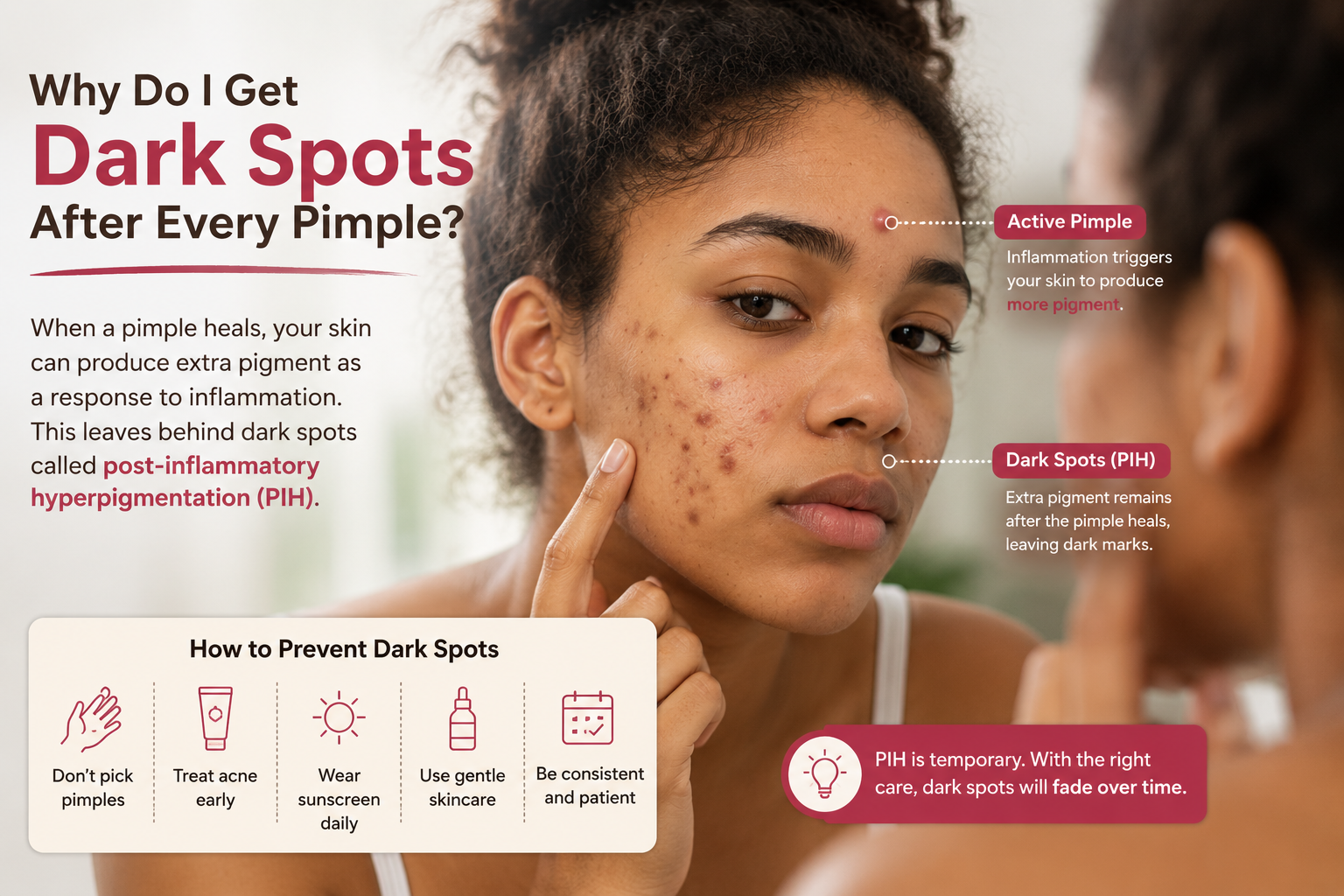
These marks are known as post-inflammatory hyperpigmentation (PIH), and they're one of the most common skin concerns after acne.
Let's look at why they happen.
🤔 Why Do Pimples Leave Dark Spots?
When a pimple causes inflammation, your skin responds by producing extra melanin—the pigment responsible for skin color.
As the pimple heals, this excess pigment can remain behind as a dark spot.
The more inflammation your skin experiences, the higher the chance of developing hyperpigmentation.
🔍 Who Is Most Likely to Get Dark Spots?
Anyone can develop dark spots after acne.
However, they are especially common in people with:
- Medium skin tones
- Olive skin tones
- Brown skin tones
- Dark skin tones
This is because these skin types naturally produce more melanin.
More melanin means a greater chance of visible pigmentation after inflammation.
❌ Common Reasons Dark Spots Keep Appearing
Picking Pimples
Picking damages the skin and increases inflammation.
This often makes pigmentation darker and longer-lasting.
Severe Acne
Large, painful, or cystic pimples create more inflammation and increase the risk of dark spots.
Sun Exposure
UV rays can darken existing pigmentation and slow the fading process.
Even small amounts of sun exposure can make spots more noticeable.
🌞 Sunscreen Matters More Than You Think
Many people focus on treatment serums but forget sunscreen.
Without sun protection, your skin may continue producing excess pigment.
Daily sunscreen is one of the most effective ways to prevent dark spots from becoming darker.
✨ How Can You Prevent Dark Spots?
While not every dark spot can be avoided, these habits can help:
- Don't pick or squeeze pimples
- Treat acne early
- Wear sunscreen daily
- Avoid harsh scrubs
- Use gentle skincare products
Preventing inflammation is often the best strategy.
⏳ How Long Do Dark Spots Last?
Healing time varies from person to person.
| Severity | Typical Timeline |
|---|---|
| Mild spots | 6-12 weeks |
| Moderate spots | 3-6 months |
| Deep pigmentation | 6-12 months+ |
Consistency is key.
Most dark spots fade gradually rather than disappearing suddenly.
🧴 Ingredients That May Help
Some ingredients commonly used for dark spots include:
- Vitamin C
- Niacinamide
- Azelaic Acid
- Alpha Arbutin
- Retinoids
These ingredients may help support a more even-looking skin tone over time.
🧠 Final Thoughts
If every pimple seems to leave behind a dark spot, the culprit is usually post-inflammatory hyperpigmentation.
The good news is that dark spots are often temporary.
By reducing inflammation, avoiding picking, and protecting your skin from the sun, you can lower your chances of developing new spots and help existing ones fade more quickly.
💡 Tip: Treat pimples gently. The less inflammation your skin experiences, the lower your risk of developing stubborn dark spots.
This article is for educational purposes only and does not replace professional medical advice. Consult a dermatologist for persistent skin concerns.
🔗 Other Articles You Might Like
- Acne Scars vs Dark Spots: What's the Difference?
- Why Are My Dark Spots Not Fading?
- How Long Do Dark Spots Take to Fade?
- Dark Spots vs Melasma